The State of Play: How Tariffs, Funding Cuts, and AI Are Testing State Leaders
At Leadership Now’s 2026 Summit, a Wisconsin manufacturer, the Massachusetts lieutenant governor, and the Utah commerce director described how tariffs, funding cuts, and AI policy are playing out at the state level.
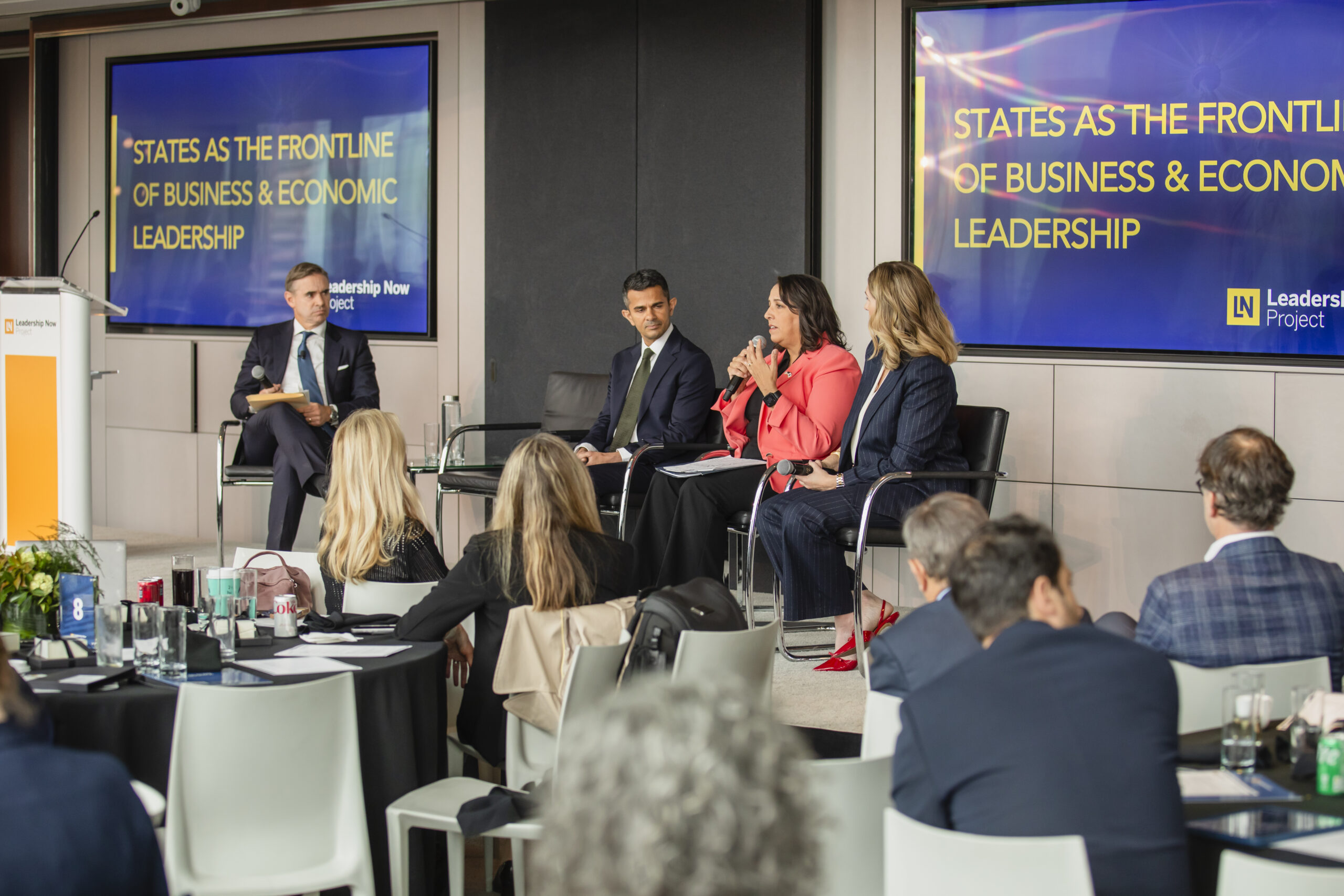
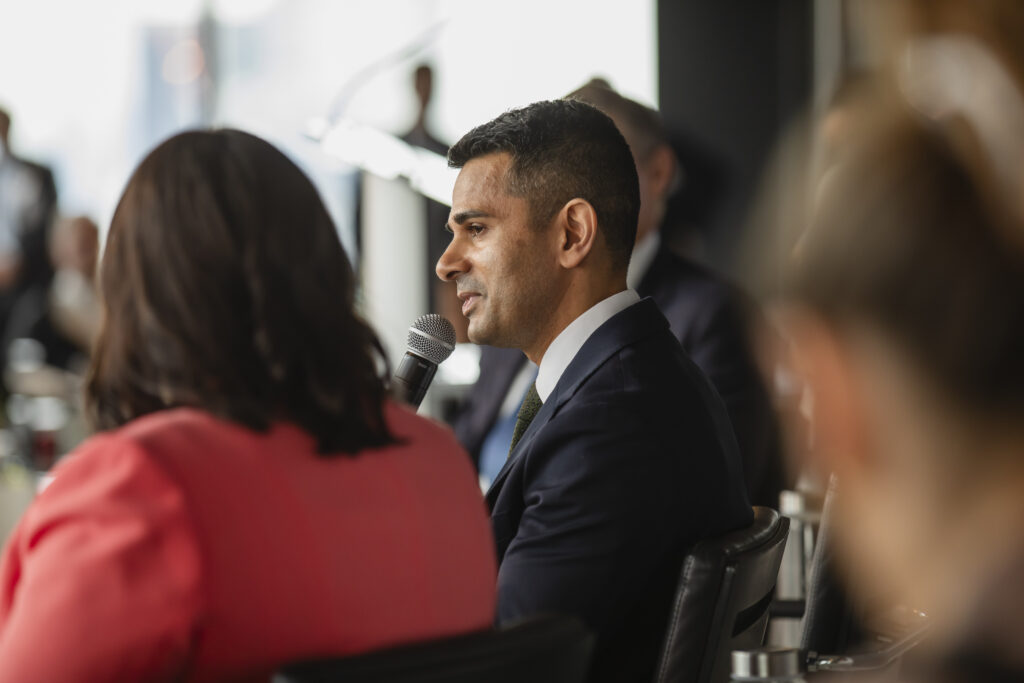
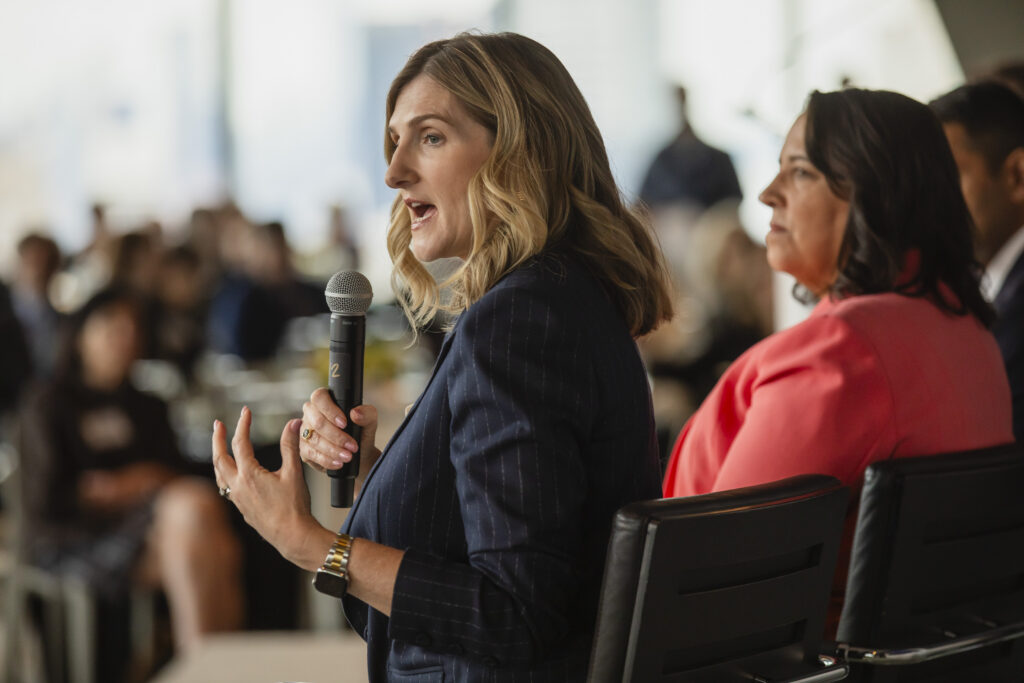
For most Americans, federal policy feels abstract. By contrast, state and local decisions have direct and immediate implications on their lives. At Leadership Now’s 2026 Summit, a panel of state leaders talked about states’ critical role in this moment of federal turbulence. Moderated by Leadership Now National Advisory Board member Sean Burton, CEO of CityView, the discussion brought together Sachin Shivaram, CEO of Wisconsin Aluminum Foundry, Kim Driscoll, Lieutenant Governor of Massachusetts, and Margaret Busse, Executive Director of the Utah Department of Commerce.
Shivaram’s company is the kind of business federal manufacturing policy purports to be helping: a 120-year-old, family-owned aluminum foundry rooted in unionized, rural Midwestern towns. But the Trump administration’s tariffs on steel and aluminum cut his revenue by 35 to 40 percent and forced layoffs, even as the costs landed mostly on customers rather than on foreign suppliers. “We cut the very jobs that the president wants to encourage, which is a tragedy,” he said.
Driscoll faced a similar squeeze after cuts to NIH funding and Medicaid undercut Massachusetts’ life sciences economy. Rather than wait for that funding to return, the state convened “Team Massachusetts,” bringing industry, higher education, and government to the table to fund research directly. Driscoll was clear: no state budget can backfill the entirety of what Washington cut. But she says that the state’s approach to covering the gap forced a useful reckoning over the respective roles of the public and private sector.
Busse spoke about Utah’s unique regulatory approach to AI. Utah has created an arrangement that lets companies test AI products under close state supervision before lawmakers decide whether permanent rules are warranted. One agreement allows an AI-driven healthcare company to handle limited prescription renewals, bounded by guardrails on drug class and renewal length and tracked closely to bring data back to the legislature. The arrangement earned a flurry of news coverage within days of being announced, with most of them, Busse said, overstating what it actually permitted. She also described Utah joining a bipartisan, multistate lawsuit after the White House pressured states not to regulate AI at all, a fight she said was about preserving state authority.
Massachusetts has also been forward leaning on AI, Driscoll said. The MBTA used AI to streamline procurement and saved three million dollars in the process. “You can’t fear and hate what you don’t know,” she said, arguing that the bigger risk for state governments is moving too slowly on AI rather than too fast.
The conversation closed on immigration, where Driscoll and Shivaram each described a sharp divide between Washington’s posture and what they’re seeing on the ground. Driscoll noted that nearly a fifth of Massachusetts residents are foreign-born with no measurable wage gap against native-born workers. She detailed the strain on thousands of Haitian residents whose temporary protected status leaves them unsure whether they’re still legally allowed to work. Shivaram described watching employees at his own foundries, roughly half of whom are immigrants, face deportation proceedings despite years spent building lives in towns that now depend on their labor. “If you’ve spent two minutes in Wisconsin, you know that hospitals are understaffed, factories are understaffed, restaurants,” he said. “We need people.”
Before ending, Burton asked each panelist for one piece of advice. Busse pointed attendees toward their state legislatures, where lawmakers, in her experience, hear from far fewer constituents than their federal counterparts. Driscoll encouraged business leaders to act in numbers. A coalition speaking out together, she said, is hard to ignore: “None of us is as smart as all of us,” she said.