“That’s the Ballgame”: Why State Offices Are Democracy’s Last Line of Defense
At Leadership Now’s 2026 Summit, election experts warned that governorships, attorneys general, and secretaries of state—not Congress—will determine whether American democracy holds.
This November, the most consequential races for the future of our democracy aren’t necessarily federal. State offices—governorships, attorneys general, and secretaries of state—will be critical to maintaining election legitimacy.
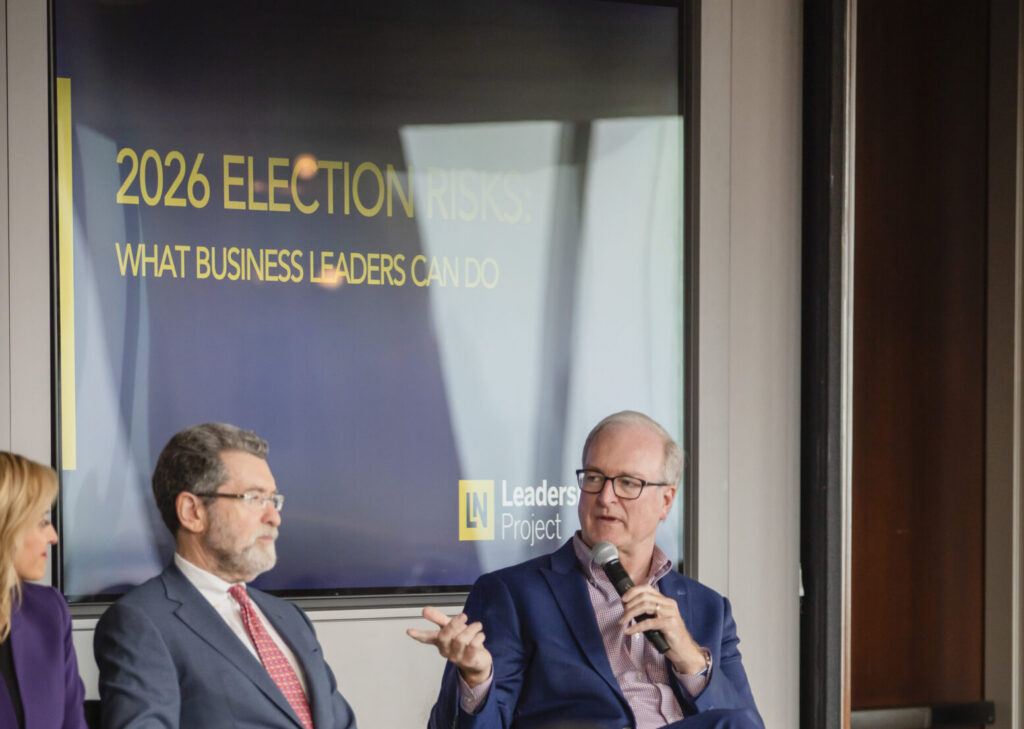
That was the central argument at Leadership Now’s 2026 Summit, where three battle-tested election experts told an audience of business leaders that the fate of our elections rests closer to home.
Jocelyn Benson, who oversaw the 2020 and 2024 presidential elections as Michigan’s Secretary of State and is now running for governor, discussed plans already being laid to disrupt the 2028 presidential race. In her telling, the success or failure of those efforts will rest on who controls state offices in two years. “If you have a governor that doesn’t say, ‘I’ll see you in court,’ but bends the knee and says, ‘Come on right in’ — that’s the ballgame right there.”
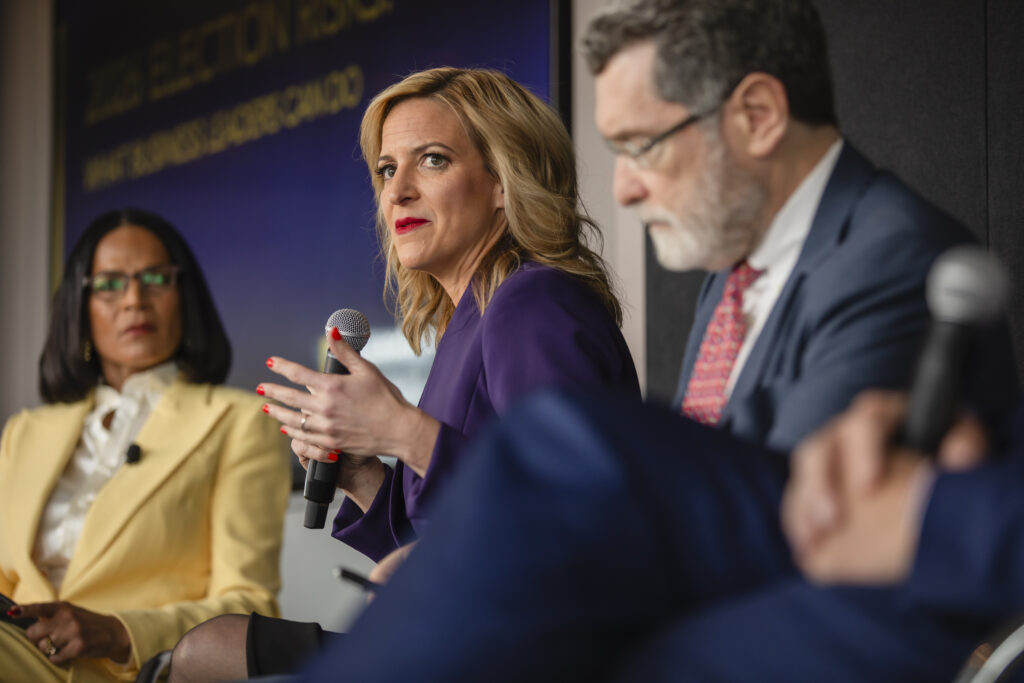
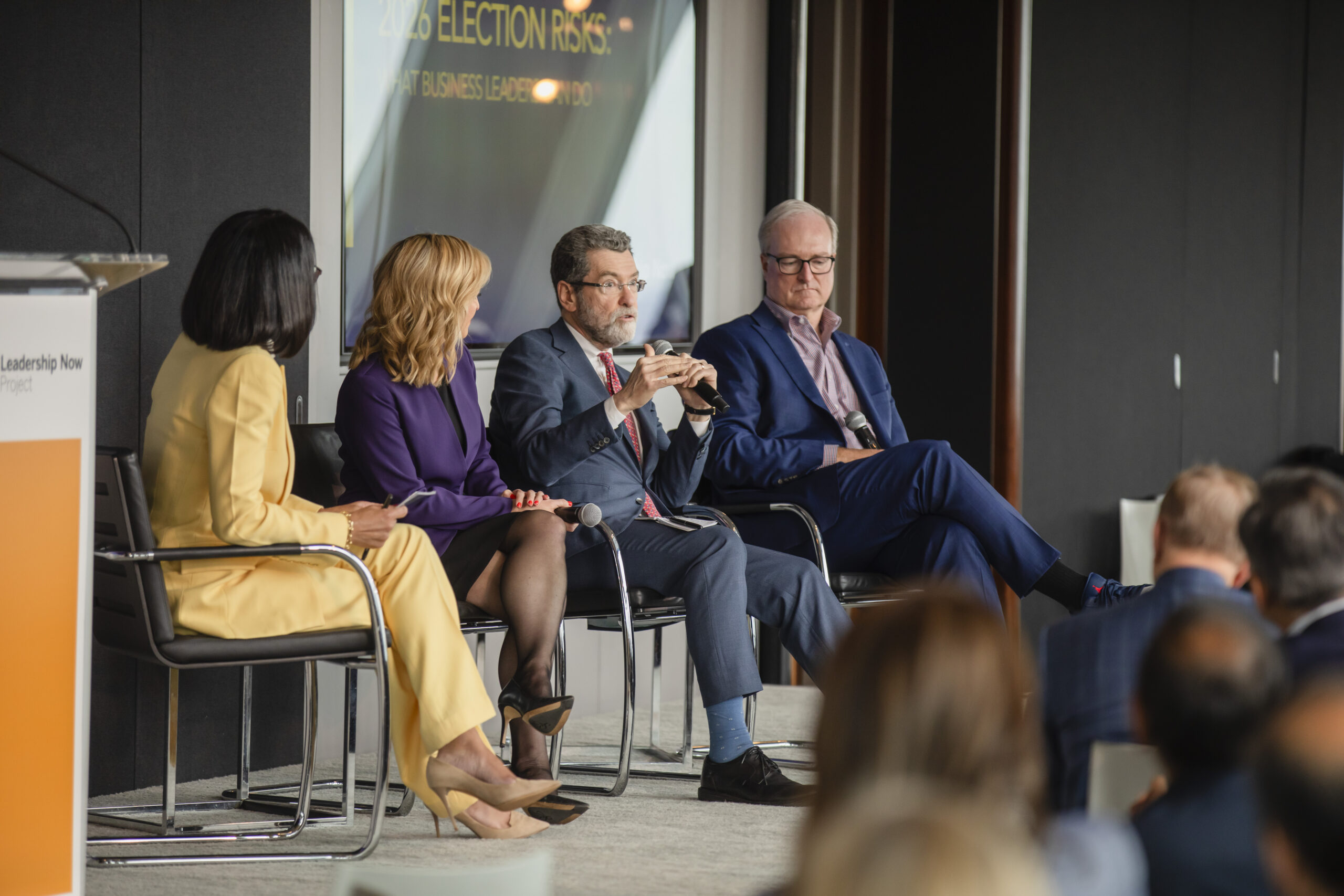
The session, moderated by author, entrepreneur, and Leadership Now member Crystal McCrary, brought together Benson, attorney and former U.S. Ambassador to the Czech Republic Norm Eisen, and former Kentucky Secretary of State Trey Grayson for a frank assessment of the election landscape.
They noted that courts are holding, for now. Eisen, whose Democracy Defenders Fund has litigated over 300 election-related cases since 2020, ticked through a list of recent wins, including an injunction against a ballot seizure in Riverside, California. “We have been dealing with these threats already and winning,” he said. Grayson, a Republican, agreed: the administration “harangues, and they don’t like the courts, but they follow them. Usually by the second or third time.”
Ultimately, though, states are responsible for administering elections. Panelists said that within days of the Supreme Court’s recent Louisiana v. Calais decision, several Southern states began redrawing congressional maps in ways that appear to exceed what the decision permits. “What we are seeing is an abuse of Calais to roll us back to where we were in the Jim Crow era with naked illegality,” Eisen said. In response, Democracy Defenders has deployed litigators, lobbyists, and communications operatives across the region.
Responding to threats also means launching state level efforts. “I want the first bill I sign into law in January of 2027 to be a state Voting Rights Act that will protect the right to vote in Michigan, period,” Benson said. Maryland and New Mexico have already passed similar laws. Grayson said more are likely to follow depending on November’s results.
For the business leaders in the room, the panelists had a clear ask: companies—particularly local businesses—should use their credibility to direct employees toward election facts and local officials. “Pillars of their communities are trusted voices,” Grayson said. He also urged companies to give employees paid time off for Election Day and early voting.
Eisen said the business community has done this before. “In 2020, business also came to the rescue—very often in quieter ways, reinforcing the message we needed to get to our elected leaders, particularly Republican elected leaders, to hold strong.” He said we urgently need businesses to do the same thing again.
“You cannot have a healthy economy without a healthy democracy,” Benson said.