Congress Needs Succession Planning Before The Next Vacancy
There’s a growing generational gap between members of Congress and the voters they represent. Our analysis defines the scale of the challenge and offers practical recommendations to promote timely transitions, stronger succession planning, and leadership renewal in the next Congress.
Published: Nov 2025 • Updated: July 2026
Senators 60+
70%
Over half of voters are under 60
Lawmakers 70+
20%
vs. 4% in peer democracies
Retire at 75
87%
of voters support the reform
Overview
Leadership Now Project’s Congressional Tenure Analysis and Benchmarks provides a data-driven foundation for bipartisan governance reform. By benchmarking congressional age and tenure across parties and against peer democracies, the analysis highlights a widening generational gap between elected leaders and the Americans they serve. Rather than singling out individuals, it offers practical recommendations to promote leadership renewal, strengthen the pipeline of future leaders, and support an orderly transition to the next Congress.
Key Takeaways
Congress is significantly older than the electorate, making the U.S. an outlier among peer democracies where earlier leadership transitions are the norm. Voters broadly support reforms that encourage leadership renewal.
For the 120th Congress’s Democratic Caucus Rules, we recommend:
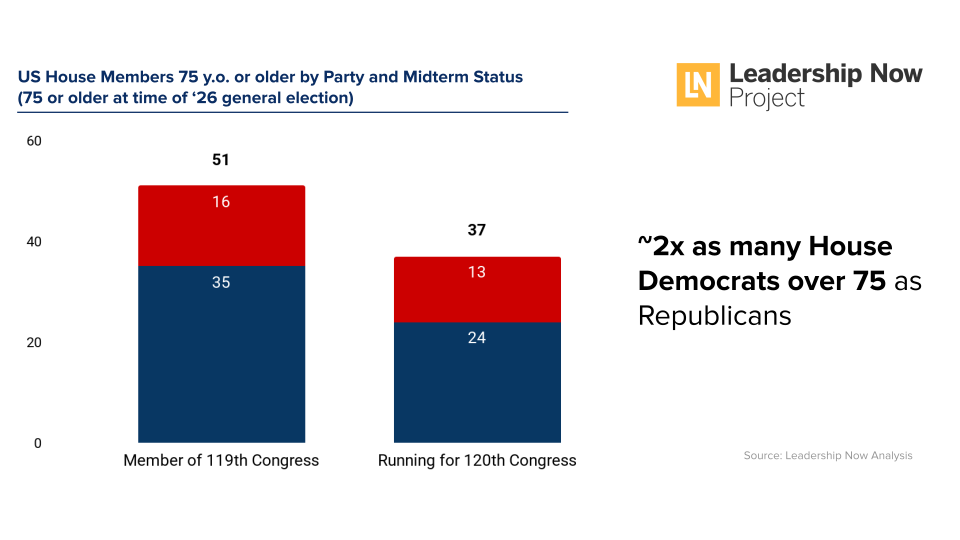
Institute a retirement norm of 75 for members of Congress to bring congressional leadership in line with workforce norms. Set the expectation that members do not seek reelection after age 75, and that they begin a defined succession-planning process at 70;
Establish term limits for Democratic House committee leadership. Cap service as chair or ranking member at four terms (eight years);
Apply merit-based House committee appointments, making demonstrated expertise and capability — not seniority — the primary criterion for committee leadership positions.